Only one of the four bullets that hit Biggie was fatal. According to Biggie's autopsy, which was not released to the public until 2012, the fourth bullet to hit him was the fatal blow, entering through his right hip and striking several vital organs before stopping in his left shoulder area. It struck his colon, liver, heart, and the upper lobe of his left lung.
Almost immediately, reports surfaced that linked Biggie's shooting to that of Tupac Shakur. Tupac was killed in September 1996, six months before Biggie, in a similar drive-by shooting. In the years that followed, Death Row Records CEO Suge Knight was widely speculated to have ordered a hit on Biggie.
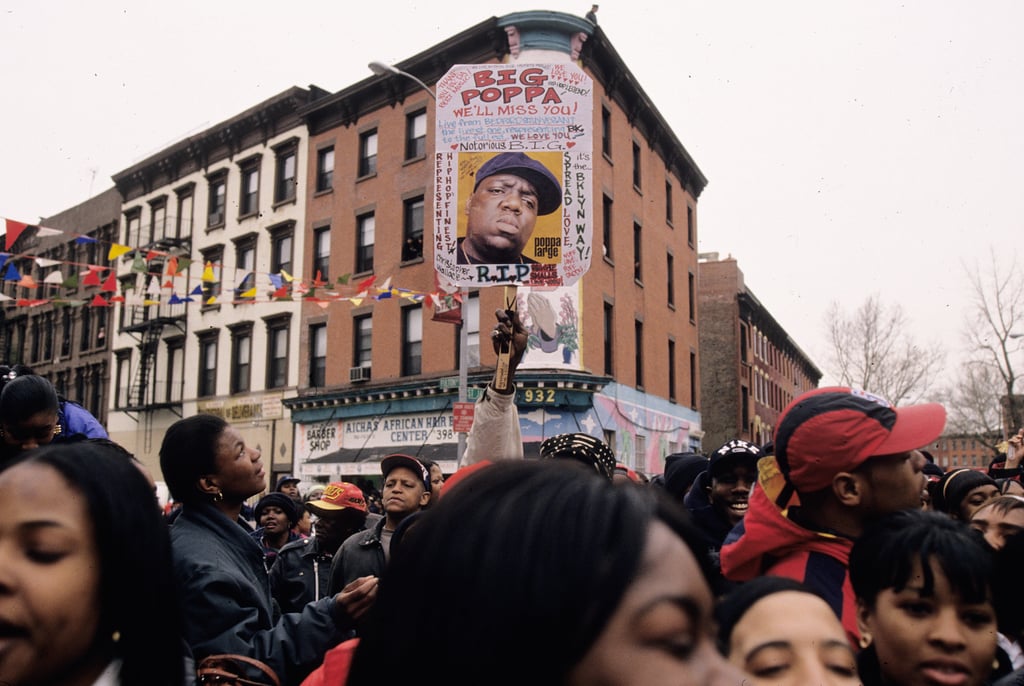
Biggie's funeral took place in both Manhattan and his hometown of Brooklyn. On March 18, Biggie was honored with a service at Frank E. Campbell Funeral Chapel in Manhattan that brought out over 350 mourners including his friends, collaborators, and famous fans; Queen Latifah, Mary J. Blige, Lil' Kim, Run-DMC, Busta Rhymes, Salt, Pepa, Spinderella, Foxy Brown, Sistah Souljah, and more came out to pay their respects, while Biggie's wife, Faith Evans, sang the gospel song "Walk With Me, Lord," and Diddy eulogized his best friend. Later, a procession was held through downtown Brooklyn to Bedford-Stuyvesant, through Biggie's neighborhood. Thousands of people packed the route.
He left behind two young children. At the time of Biggie's passing, his daughter, T'yanna, from a previous relationship was only 3 years old. Faith Evans had given birth to the couple's son, Christopher "C.J." Wallace Jr., just four months earlier.
His album was released as scheduled. On March 25, 16 days after his death, Biggie's Life After Death dropped as planned. It hit No. 1 on the Billboard 200 charts, though his biggest success was with the album's second single, "Mo Money Mo Problems," which reached No. 1 in the Hot 100 and made Biggie the first artist to have the top post posthumously.
Perhaps most chillingly, the case remains unsolved. While there have been a number of suspects and possible motives — including financial gain for the record companies, a police-corruption scandal, and a conspiracy between Suge Knight and disgraced LAPD Officer David Mack — Biggie's killer has yet to be identified or caught over 20 years after his tragic death.