Is Your Toddler Too Old For a Rear-Facing Car Seat?
Why You Shouldn't Be Worried About Keeping Your Toddler Rear-Facing For "Too Long"

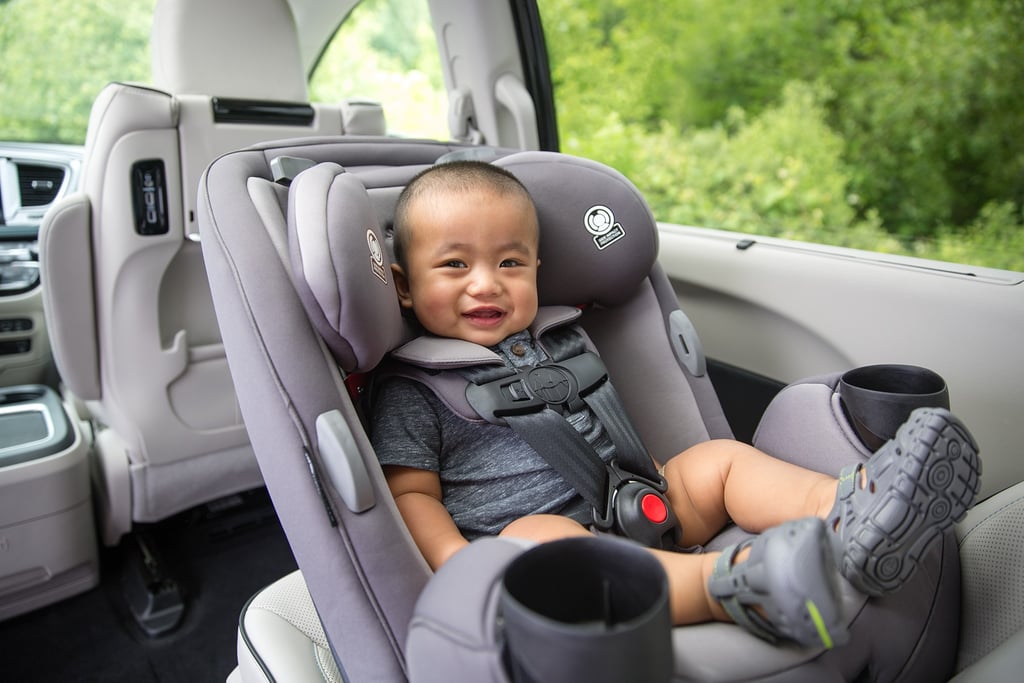
Several states have passed laws about keeping children in a rear-facing car seat until the age of 2 — as per the AAP's official recommendation — but for some reason there still a stigma about keeping your child in this direction for that long, especially if you go beyond their second birthday. In a survey from Chicco, 12 percent of parents admit they just turn their child around when they feel the time is right, rather than heed the recommendations, and 19 percent of parents turn their child around based solely on what they see other parents doing — and though those percentages don't seem huge, it's clear that enough parents are reading the wrong cues when it comes to car seat safety.
To bust a few myths and quell some common concerns about rear-facing seats — for example, 40 percent of parents were found to turn their child forward simply because they thought "their child's legs look too cramped" — and to ensure that parents keep their children rear-facing for as long as it's safe, we got helpful information from Dr. Benjamin Hoffman, a pediatrician, CPST-I, and uncompensated child passenger safety consultant for Chicco, and Ryan Hawker, car seat expert and senior director of product marketing at Dorel Juvenile USA.

1 It's Totally OK For Your Toddler's Legs to Touch the Back of the Seat
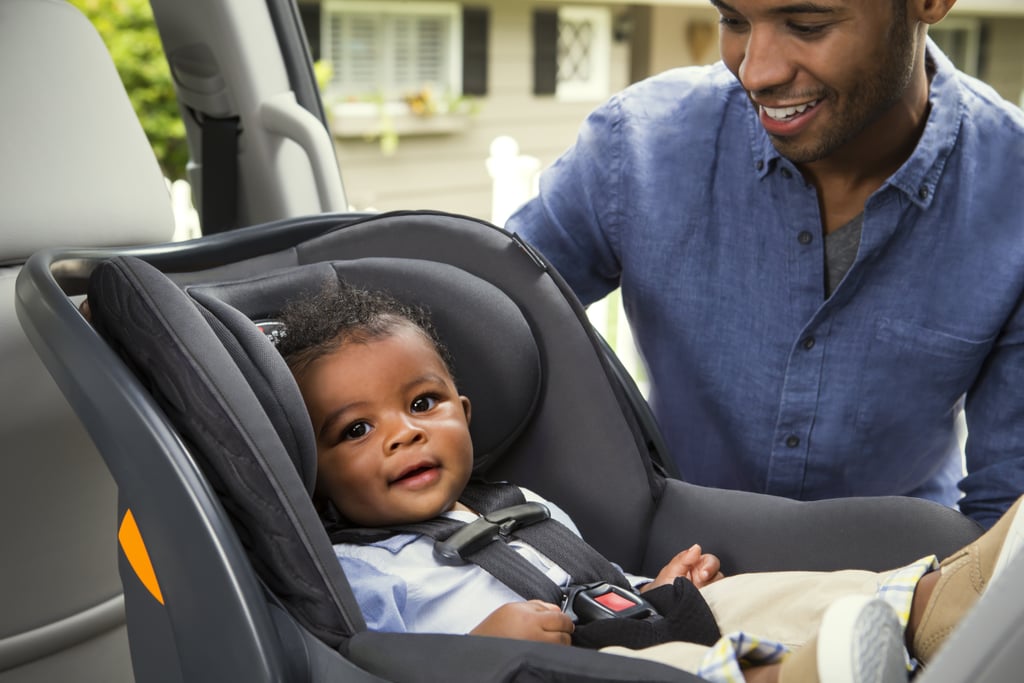
Many parents turn their children around before 2 — or even right after they turn 2 — simply because it looks like their child may be "uncomfortable." However, your child's legs touching the back of the seat or being a little cramped isn't actually a big deal.
"Many parents worry if their child's feet are touching the seat or that their legs appear squished that it automatically means their child is uncomfortable, or that they may injure their legs," Dr. Hoffman told POPSUGAR. "Kids are superadaptable and can find a way to be comfortable in almost any situation without even thinking about it. Sitting cross-legged or with their legs up on the back seat is totally fine." Hawker adds: "Unless there are very special circumstances, it is almost always acceptable if a child's feet are touching the back of the vehicle seat."

2 Rear-Facing Is Associated With Fewer Injuries in an Accident, Including Leg Injuries
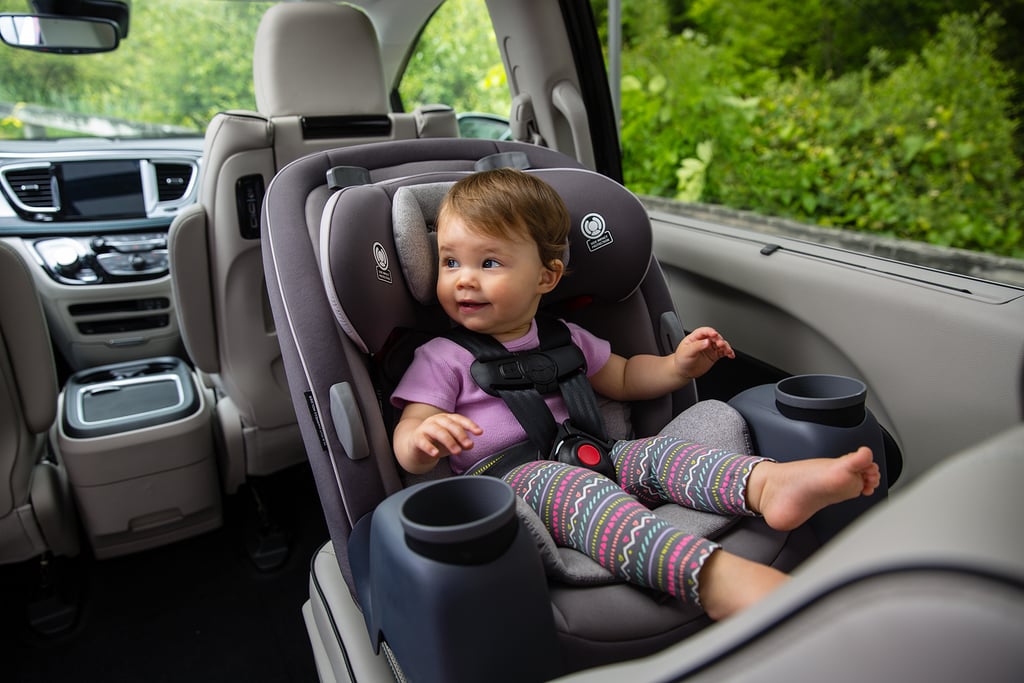
Although some parents remain concerned about their rear-facing children's legs being hurt or broken in the case of an accident, our experts assure us that the risks of injury while rear-facing are much smaller. Additionally, protecting the head and neck are of the utmost importance, and this position protects those areas well.
"As far as injuries go, it turns out that arms and legs are rarely injured when rear-facing, so there is really nothing to worry about in that sense," says Dr. Hoffman. "If they are injured in a crash, it's important to remember that legs and arms are easier to fix than brain or head injuries, so while it's hard to think about a child being injured at all, the fact remains that rear-facing is associated with way fewer injuries period."
Hawker suggests speaking to your child's pediatrician to get their recommendations, as not all children are the same. "If your child's pediatrician feels that your particular child needs to remain rear-facing longer, you should follow that advice," he says.

3 It's a Myth to Say That a Child Is "Too Old" to Rear-Face
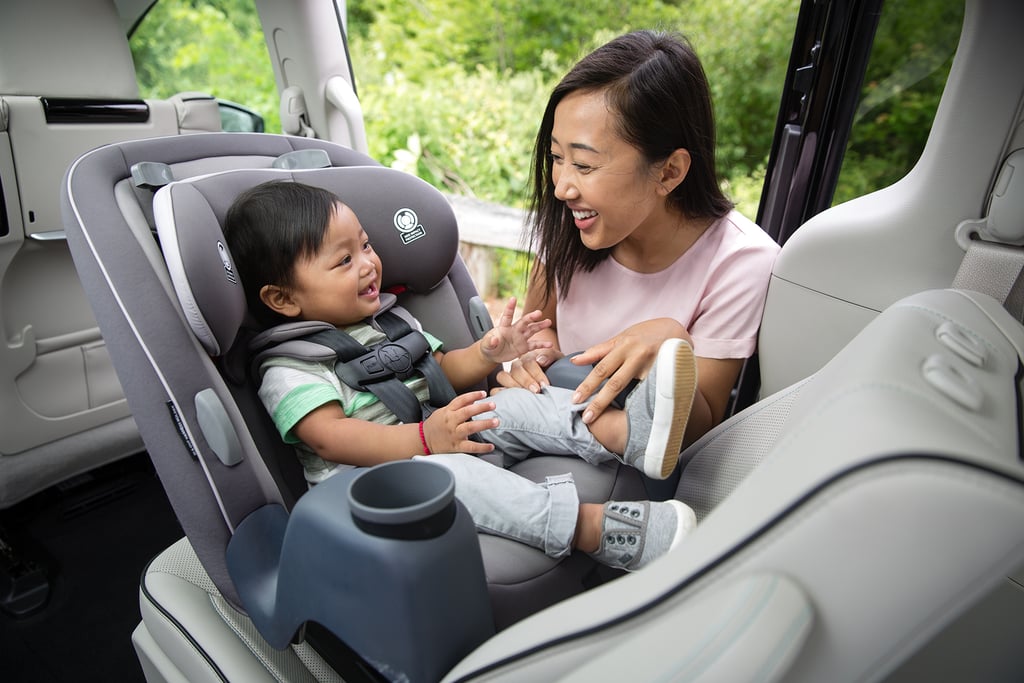
Of course, convertible car seats have height and weight limits as suggested by the manufacturers, but not all children outgrow those limits by age 2 (and on the other end of the spectrum, some may outgrow them before that). If your child's second birthday has come and gone, but they're still within the rear-facing limits of their seat, it's suggested you keep them facing the back of the car.
Dr. Hoffman goes so far to say that "Age is a good benchmarking tool, but . . . parents should not make the switch to forward-facing until their child outgrows the rear-facing weight and height limits for their car seat according to the instruction manual."

Hawker, however, notes that there are a lot of important factors besides weight and height limits at play, and mentions that children don't necessarily need to outgrow their seat to forward face. "After [a child's first birthday], many factors need to be considered," he said. "It is always critical that the car seat is used correctly. That includes the install of the car seat to the vehicle and the fit of the child in the car seat. The car seat must be used correctly every single time to protect correctly every single time."