Why Your Next Holiday Should Be at a Health Retreat


At first glance, health retreats and holidays look similar. They're both chances to take a break from your daily grind and to reset, ideally returning to your routine re-energised. The main difference between the two, says Australian psychologist Nancy Sokarno, is that a health retreat is designed to help you tune in rather than check out.
"Retreats are spaces where everything — from the environment to the activities — is geared towards healing, reflection and growth," says Sokarno. "Rather than escaping life, you're offered a chance to reconnect with yourself in a supportive and structured way."
Unlike holidays, health retreats can also be centred around a major goal, like detoxing, weight loss, fitness, relief or mindfulness, adds another Australian psychologist, Noosha Anzab. They're also usually set in nature-rich, tranquil settings and are led by professionals, like nutritionists, therapists, personal trainers, yoga instructors and health practitioners.
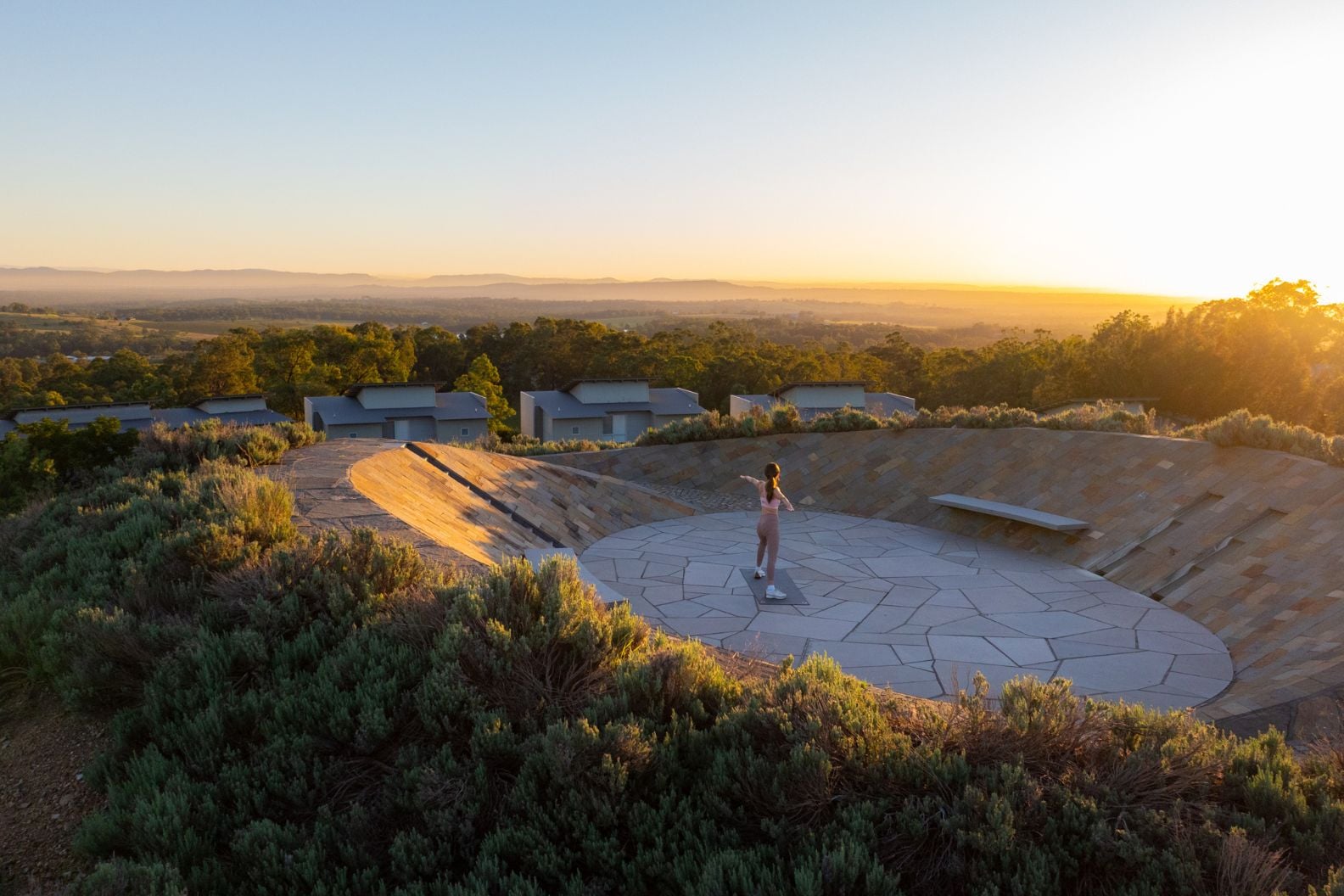
If you're tossing up between booking a health retreat or a holiday for your getaway, here's why you should go with the former — and specifically one of Australia's top retreats: Elysia Wellness Retreat in Australia's Hunter Valley. A two-hour drive from Sydney, the retreat is set on 4 hectares of hinterland with indoor and outdoor pools, veggie garden and library. Though in a popular holiday area, best known for its wine country, it's a prime spot for tuning in, rather than checking out.
You Get Time For Introspection
Retreats are great for introspection and developing coping skills due to several factors, says Anzab — the first being environmental detachment. When you're on a retreat, the often natural, low-stimulation environment can help restore cognitive function and allow for deeper reflection.
Another reason retreats are great for introspection is the structured reflection they offer. "The way we reflect on retreats often means our thoughts, emotions and behaviours are deliberately considered," says Anzab. "As such, we can be curious about more adaptive coping skills."
Finally, retreats give you social support and a guided practice. Group work, therapeutic exercise and one-on-one guidance at retreats let you learn through observation and reinforcement, which helps to drill in the learning. Elysia has seminars and workshops you can book into, where you can learn from experts, and a calendar of activities led by staff, trained in coaxing out mindfulness.
You Get to Meet Like-Minded People
While you can keep to yourself or meet new people at many health retreats — at Elysia, you can socialise with fellow guests at meal times, during the scheduled group activities or on your own in the facilities. Sokarno says you shouldn't underestimate the power of simply being in a space where everyone is focused on feeling better.
"It creates a sense of community and connection, which is so important for mental health," she says. "You're reminded you're not alone in wanting more balance or peace – and that shared energy can be really motivating and uplifting."
Anzab adds that, often, we can mimic the healthy behaviours we see in the people we're surrounded by. This increases our ability to internalise and adopt those ways ourselves.
"If we're surrounded by health-conscious people, the shared group identity enhances our commitment and self-esteem," says Anzab. "Our sense of relatedness is enhanced, which is a big part of what drives intrinsic motivation."
You'll Get the Chance to Move Mindfully
Movement is one of the most natural ways to support mental wellbeing, says Sokarno. Activities like yoga, swimming and tennis, all offered at Elysia, don't just boost endorphins — they also help regulate stress and connect us back to our bodies.
"At a retreat, these activities are often more about enjoyment and wellbeing than performance, which helps rebuild a healthy, positive relationship with movement," Sokarno says.
Anzab adds that exercise can also lower cortisol, which reduces our anxiety and stress, increases our resilience through challenge and mastery and betters our mind-body awareness. She notes that this isn't exclusive to exercise at retreats, though, at a retreat, there's more of an unspoken rule that movement should be done mindfully.
You'll Continue to Reap the Rewards After
Finally, there are the after-effects of a health retreat. Anzab notes that when we practice behaviours repeatedly in a consistent context, such as starting every day with a meditation or generally eating healthier, they begin to become habits.

"Retreats allow for repeated exposure to routines, making habits easier to internalise," she says. "Once the retreat is over, even if we modify what we learnt at the retreat and incorporate it into our routine, we can still trigger some positive behaviours."
As Sokarno puts it, a retreat can act like a reset button. Once you've experienced the benefits of better sleep, slower mornings, mindful eating or regular movement, it's easier to see how those things can fit into your real life.
"Even if you take home just one or two habits, the shift in mindset often stays with you, helping you make choices that support your mental and emotional health long-term," she says.
Until July 18, 2025, the retreat is offering a long-stay promotion with 15% off three- and four-night stays and 20% off five and seven nights. It also includes 10% off two-night tailored programs. The stays need to be done before December 14, 2025.