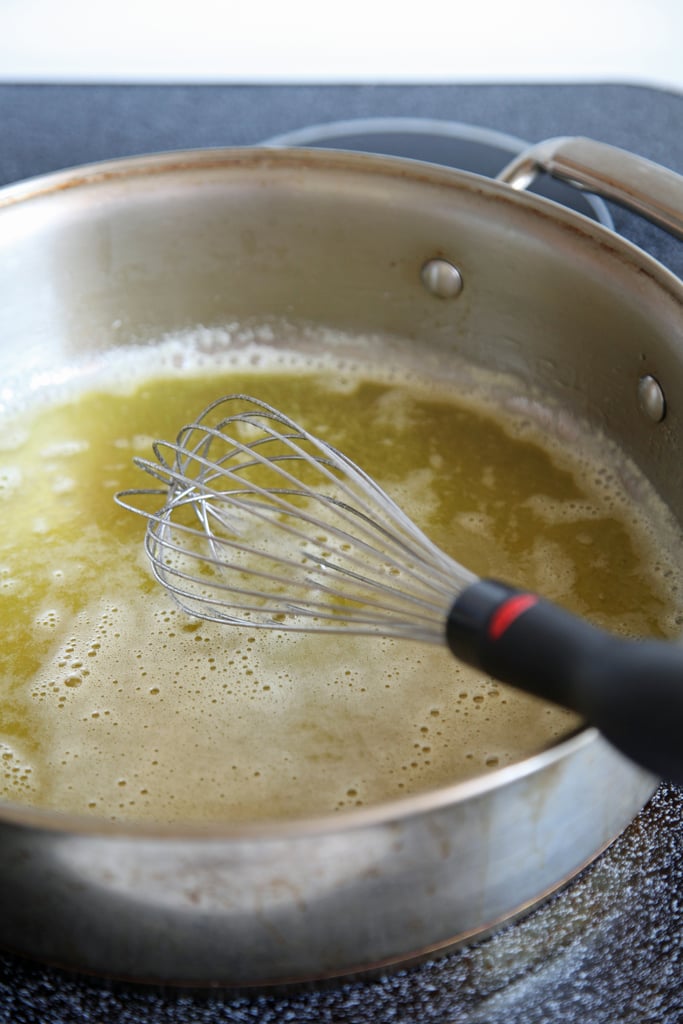
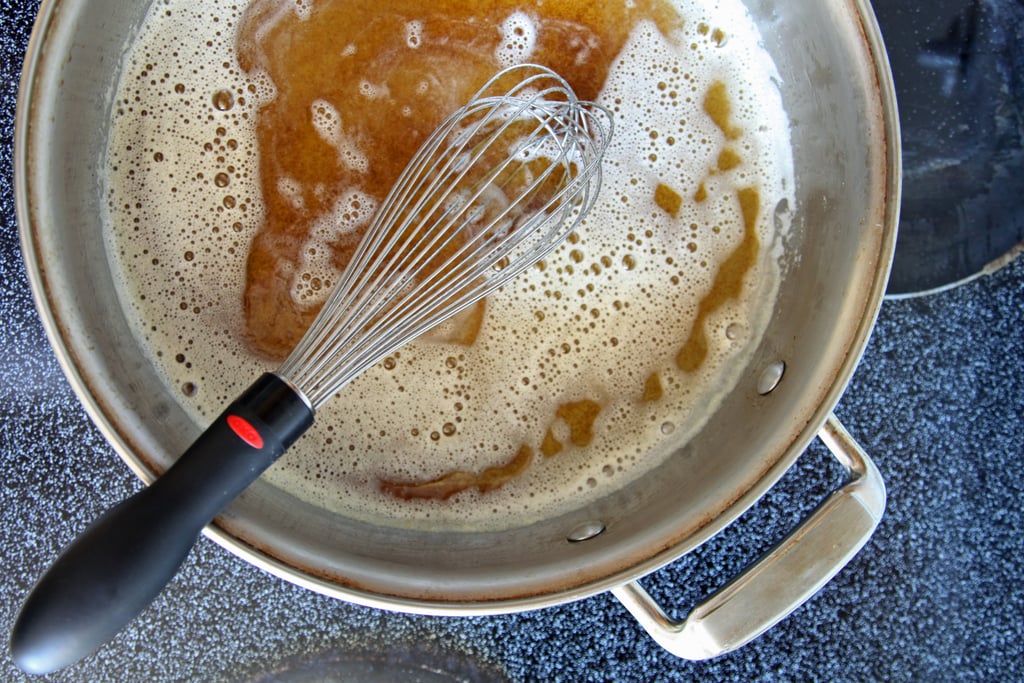
Brown butter is my go-to trick for adding nutty flavor and depth to everything from moist and flaky fillets of fish to carrot cupcakes, but my first go-around with this classic technique was, admittedly, a bit intimidating. Feeling just as daunted? Don't worry: it's simple, as long as you follow a few key steps, and entirely worth the effort.
Slice the Butter
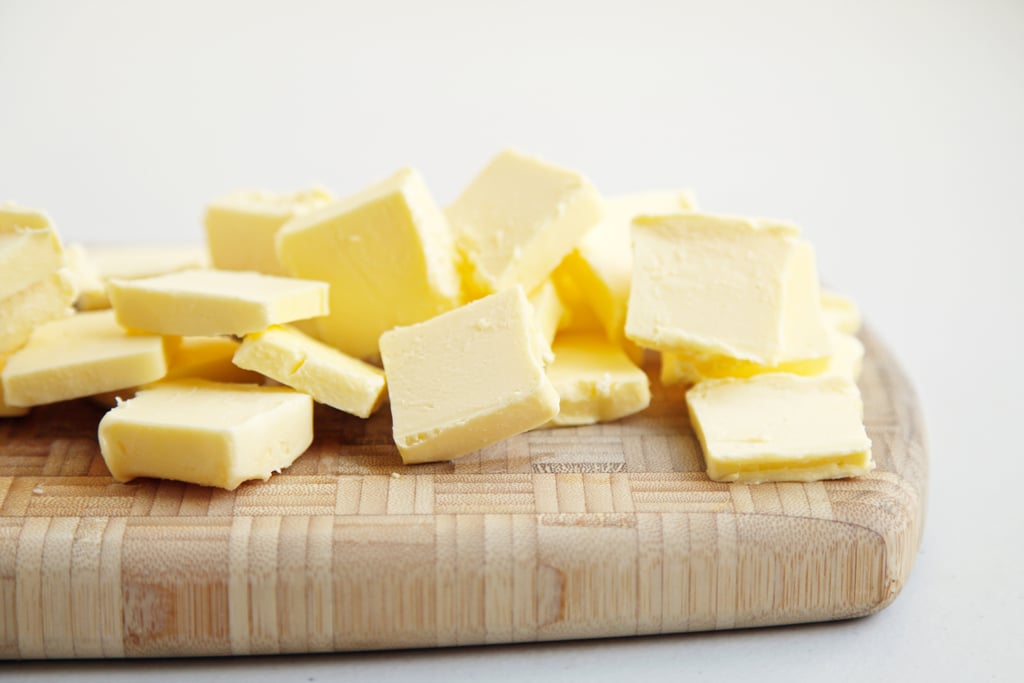
Image Source: POPSUGAR Photography / Nicole Perry
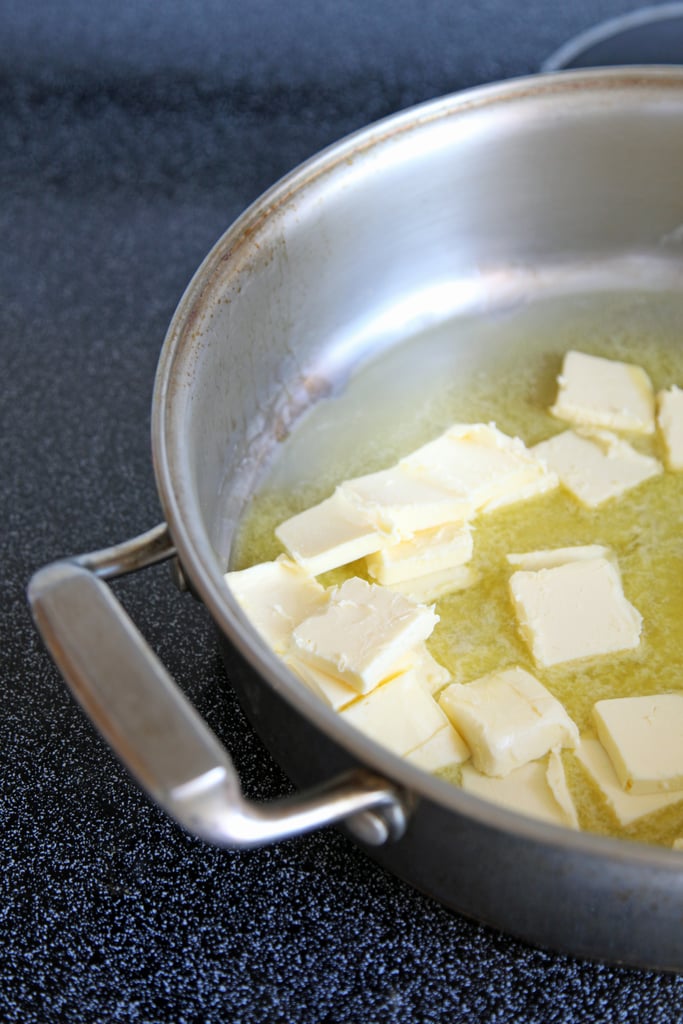
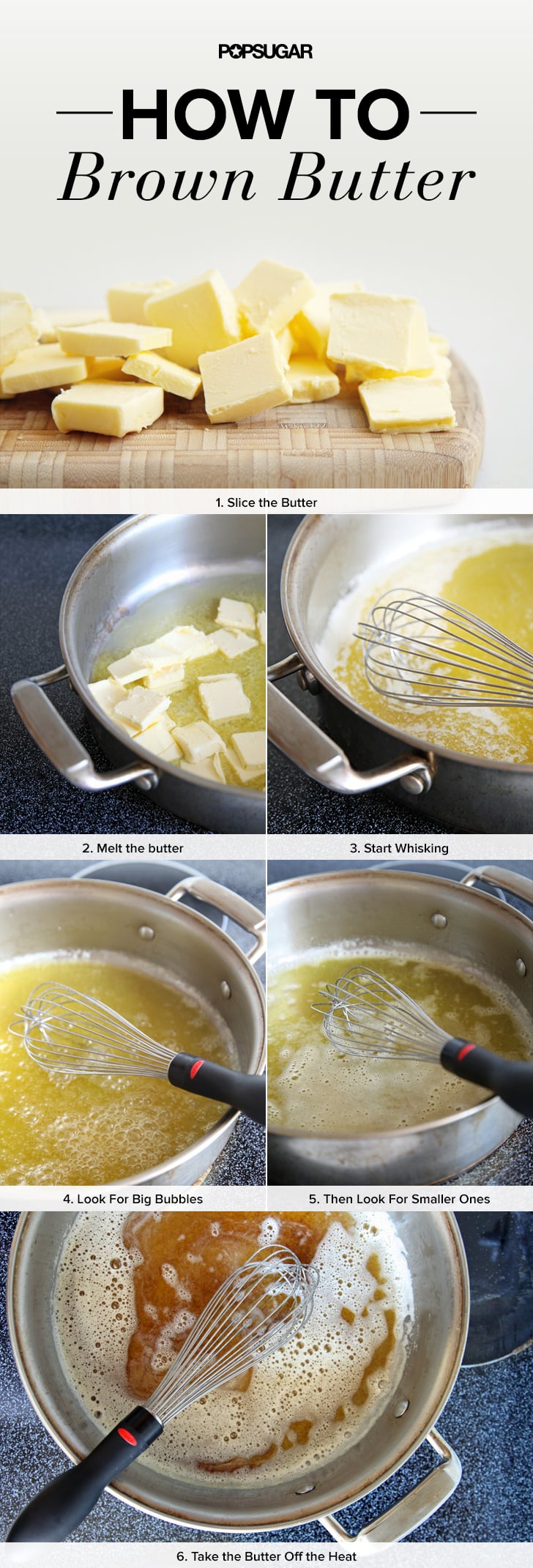
Slice the butter into even slices so that it will melt, and later brown, uniformly (and faster).
1 / 8
Melt the Butter
Image Source: POPSUGAR Photography / Nicole Perry
To fully see the browning process, start by melting the butter over medium-low heat in a light-colored pan, occasionally swirling the pan to promote even melting. In a rush? Butter can be browned over higher heat; it just requires constant attention, as butter goes from brown to burnt rapidly over high heat.
2 / 8
Start Whisking
Image Source: POPSUGAR Photography / Nicole Perry
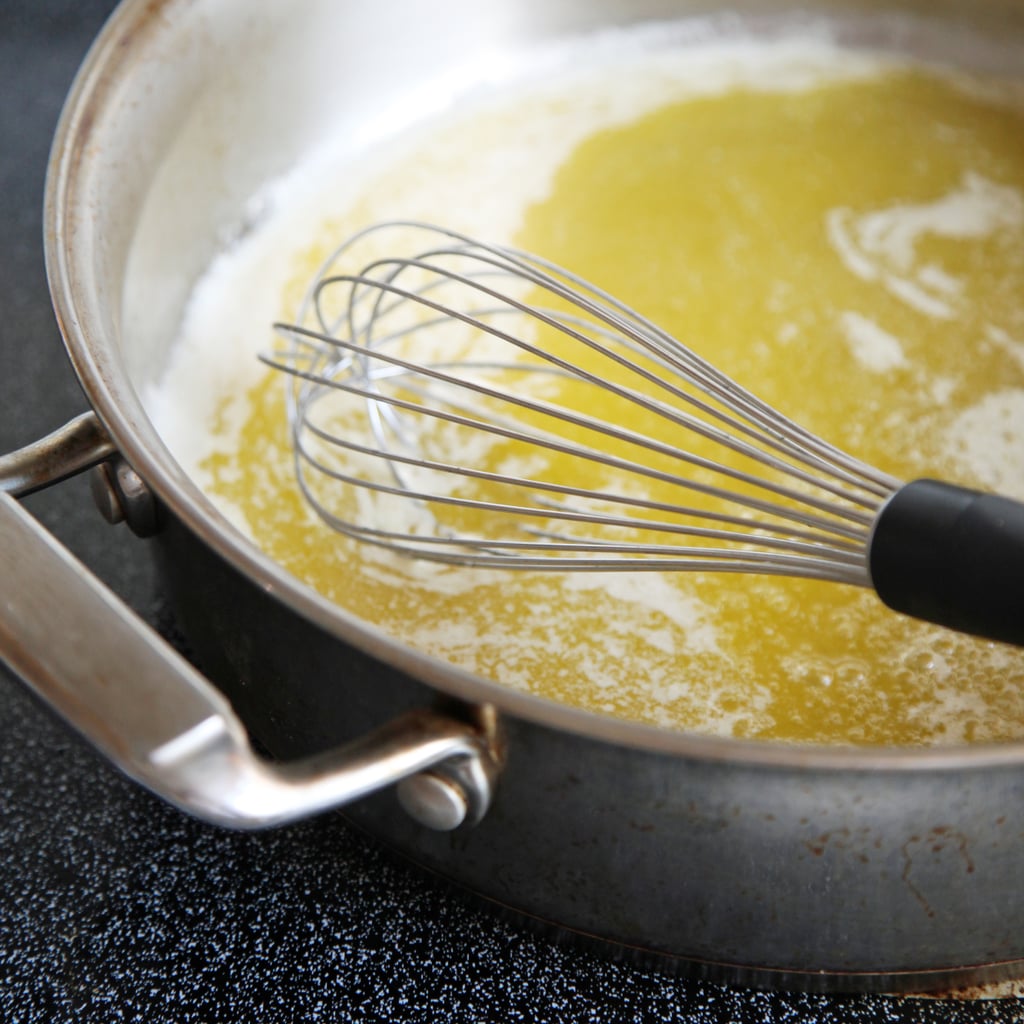
Once the butter has melted completely, start whisking frequently.
3 / 8
Look For Big Bubbles
Image Source: POPSUGAR Photography / Nicole Perry
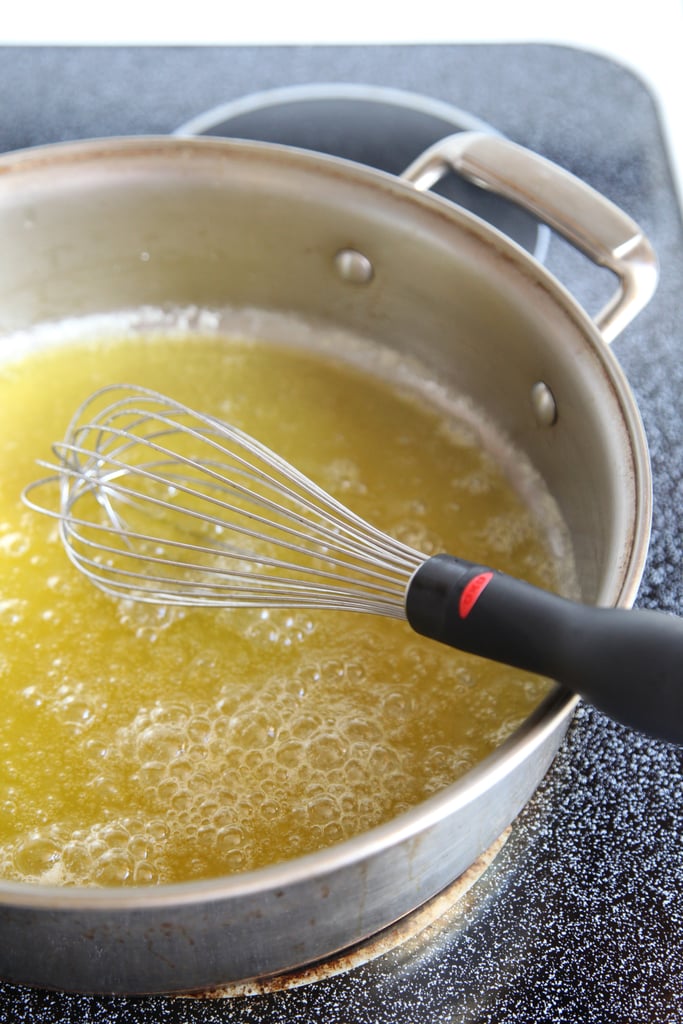
The butter will bubble violently at first.
4 / 8
. . . Then Look For Smaller Ones
Image Source: POPSUGAR Photography / Nicole Perry
The bubbles will then become more delicate and frothy. The milk solids will start to darken at this stage. Make sure to keep whisking vigorously at this point.
5 / 8
Take the Butter Off the Heat
Image Source: POPSUGAR Photography / Nicole Perry
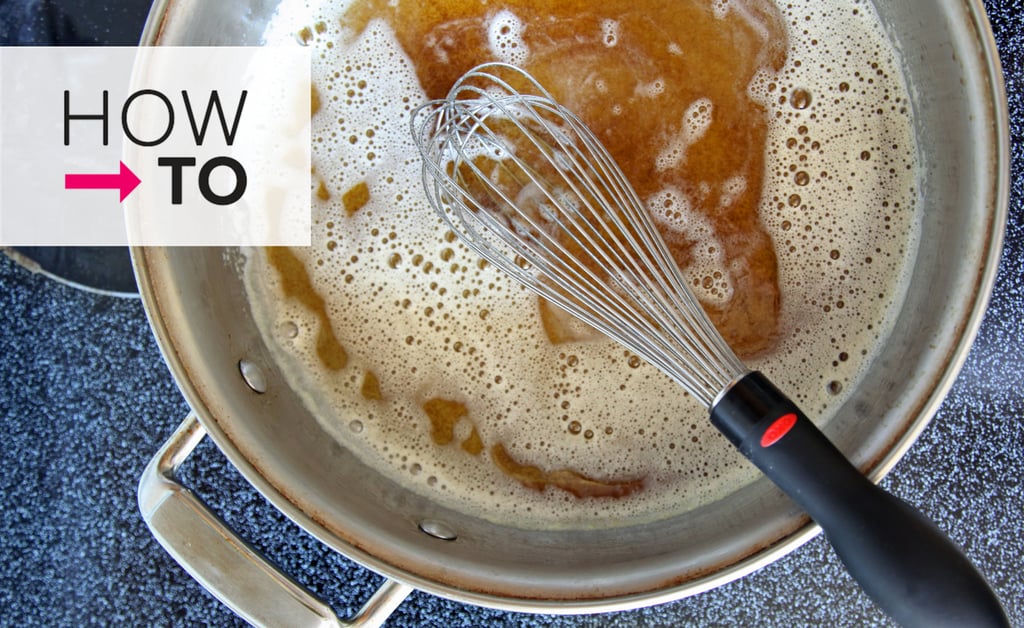
When the butter has turned a deep amber brown and smells pungent and nutty, take it off the heat.
6 / 8
Transfer to a Heat-Safe Container and Use
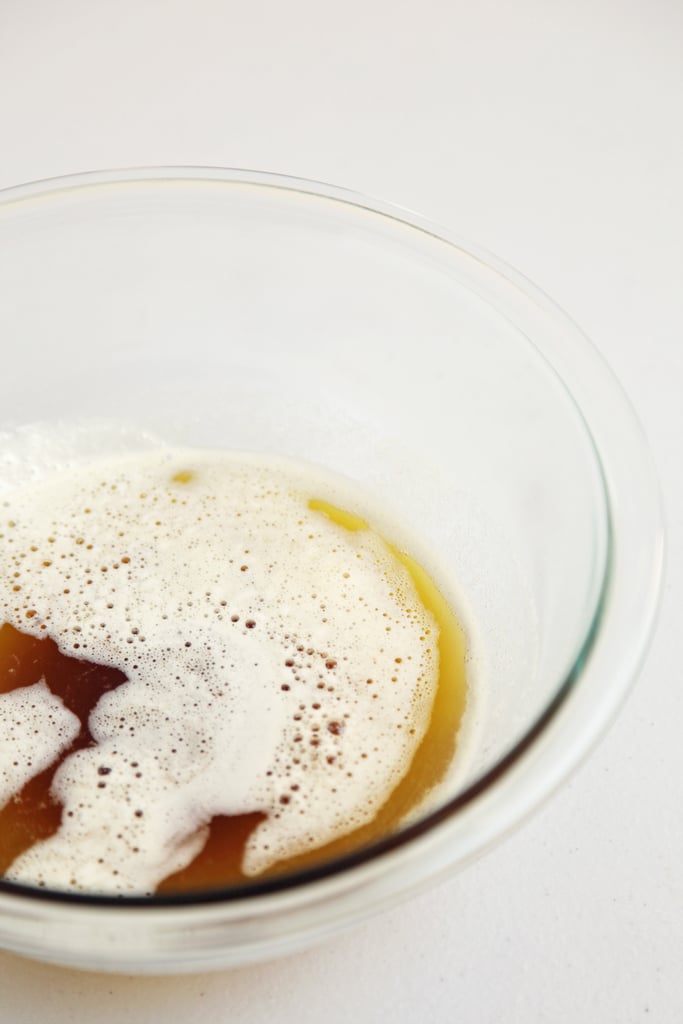
Image Source: POPSUGAR Photography / Nicole Perry
If you're not using the brown butter immediately, transfer it to a heat-safe container so as to avoid carryover cooking, which could lead to burnt butter. Brown butter can also be refrigerated (or even frozen) in a tightly sealed container for later use.
While liquefied brown butter makes a classic pairing when drizzled on cooked vegetables or served with lemon on white fish, one can also refrigerate brown butter until solid; solidified brown butter makes a great substitute for regular butter in baked goods.