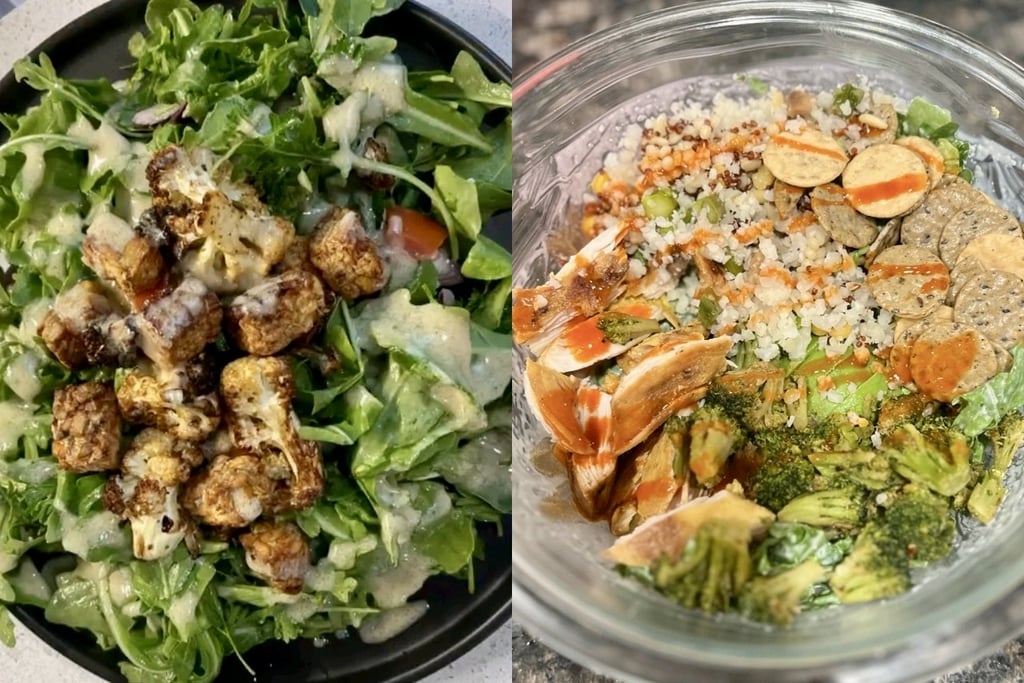
Since I tended towards plant-based protein before, dinners usually consisted of a salad with air-fried tofu, veggies, cheese, a creamy drizzle of dressing, and either a chunk of bread or my favorite crackers that I noshed on while I cooked. This also came after an afternoon snack, which was usually an apple or something salty. LeVeque depicted my day like this: "Little spike, half crash, bigger spike, half crash, bigger spike, crash, crash — you are depleted of energy; you're starving and all you want is carbohydrates."
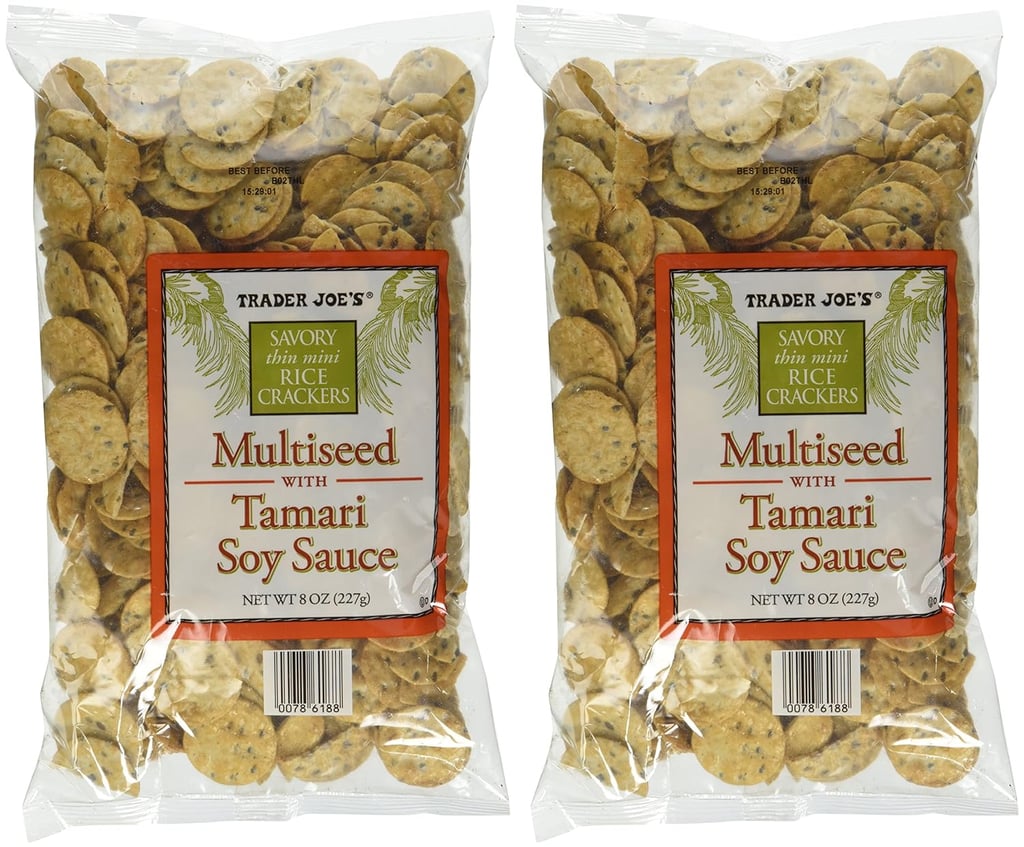
Of course, carbs aren't inherently bad. In fact, they're an essential macronutrient that deserve a place on our plates. So rather than cutting my carb intake, I was focusing on increasing my protein intake. (Good news, since I'm completely unwilling to give up my affinity for Trader Joe's Multiseed Soy Sauce Rice Crackers ($18).) In theory, this would help my body digest the carbs I was eating more slowly and potentially minimize the blood glucose swings I was experiencing.
As far as portion size when it comes to meat (which ranges from chicken and ground turkey to salmon, depending on what my partner and I are feeling), LeVeque suggested using my hands as a measuring tool. She instructed me to have the minimum size and thickness of the circle of my palm, but doubled. Two or three stacks of cards is another good visual reference.
"I want you to think about a big piece of salmon that you get at a restaurant, which is like maybe the size of your phone. But I want it to be maybe two inches in thickness. I want you to not be afraid of over-eating protein," she said.
LeVeque tended to recommend meat as a protein source, and I wasn't against adding a little more to my diet to see how it affected my energy and hunger levels throughout the day. But again, meat isn't essential for a high-protein lifestyle. Pairing plant-based protein sources is another great way to increase your intake of the macro.
If you need a portion reference for fats, LeVeque compared a tablespoon to the length of your thumb from the top to the wrist. "One to two tablespoons, or one to two thumbs, if you're using a drizzle."