How to Start Running
How to Finally Form a Running Habit That Sticks


Often, people talk about how simple running is. "All you need are sneakers!" they might say. But if you've never done it before (save for a timed mile in your Presidential Fitness Test days), knowing how to start running can be daunting. Even beginner runner plans can assume a level of know-how or ability that not everyone has.
But even though there's more to running than meets the eye, running is accessible, if only because there's no benchmark you have to hit to become a runner. Someone who run-walks a mile or two on the weekends is just as much of a runner as someone who trains for half-marathons — although their ultimate goals and training plans may look very different.
All that to say: if you're interested in becoming a runner, that goal is achievable. Learning how to start running — or how to start running again, after taking some time off — just requires the right know-how.
To that end, we rounded up advice from running coaches and physical therapists to put together this how-to-start-running plan for beginners. It includes everything you need to start running without losing your motivation, from the best beginner running shoes to advice for training on the treadmill.
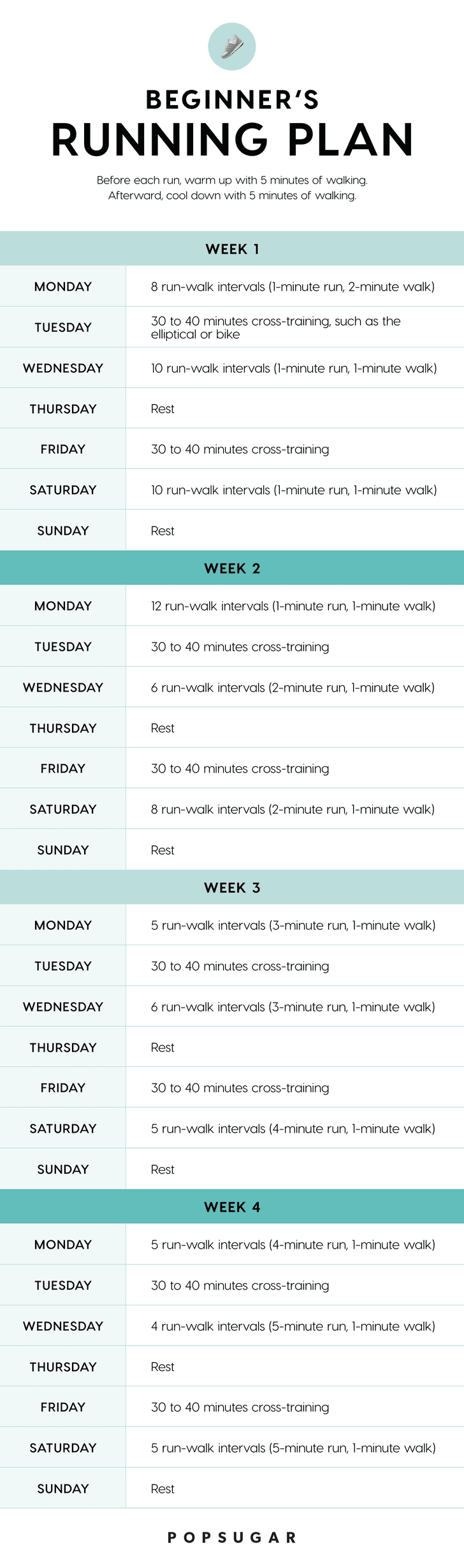
Broken down week-by-week, this guide shows you how to transition from walking to running, how to warm up effectively, and how to use technology to your advantage. Read on for the full four-week running plan that'll help you start (or pick up) your running journey on the right foot.

First, Ease Into Cardio by Walking

Then, Progress to Walk-Run Intervals

Finally, Transition to Runs

Aim to Train 3 to 4 Days a Week

Warm Up With Dynamic Movements

Run For Time, Not Distance

Don't Set a Goal Right Away

Give Yourself Grace

Incorporate Strength Training Into Your Routine

How to Pick the Best Beginner Running Shoes

Treadmill Running Tips For Beginners

When to Use a Beginner-Friendly Running App

Try a Beginner Running Plan