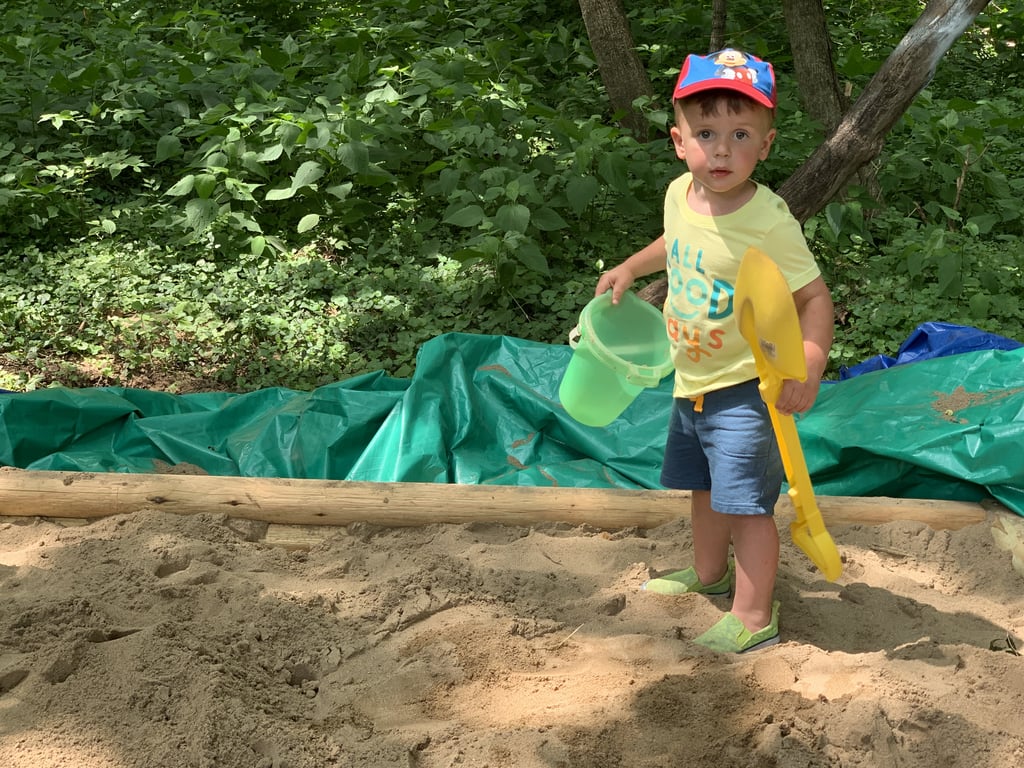
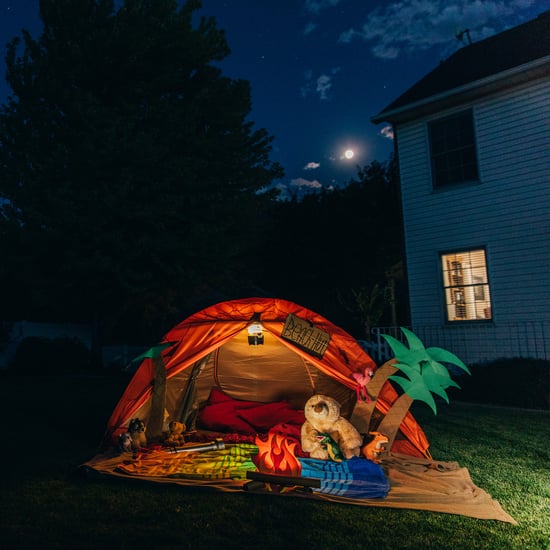
Adventure playgrounds challenge children in ways that other playgrounds do not. Dr. Vanessa Lapointe, registered psychologist, parenting educator, and mom of two boys in Vancouver, British Columbia, Canada, told me, "Because adventure playgrounds have no set paths, activities, or certain way to do things, kids must work to problem solve and risk assess. When play is too structured, those skills don't become available to them."
"Babies, toddlers, and children of all ages are capable of so much if we meet them at their developmental stage." — Jessica Rolph
Dr. Lapointe also stressed the importance of "giving kids the opportunity to explore and challenge themselves by stepping out of their comfort zones." This builds resilience and fosters creativity — two traits that can be dampened when we only present our kids with highly structured, relatively low-risk situations.
Jessica Rolph, cofounder and CEO of Lovevery, a toy subscription service created by child development experts, agreed, adding, "Children are builders, tinkerers, engineers, and problem-solvers, and the more we honor and make space for that, the more they get to play the way they deserve to. When their natural curiosity is supported with materials and opportunities, when their desire to experiment is nurtured, and when they feel emotionally safe, children are remarkably good at playing."