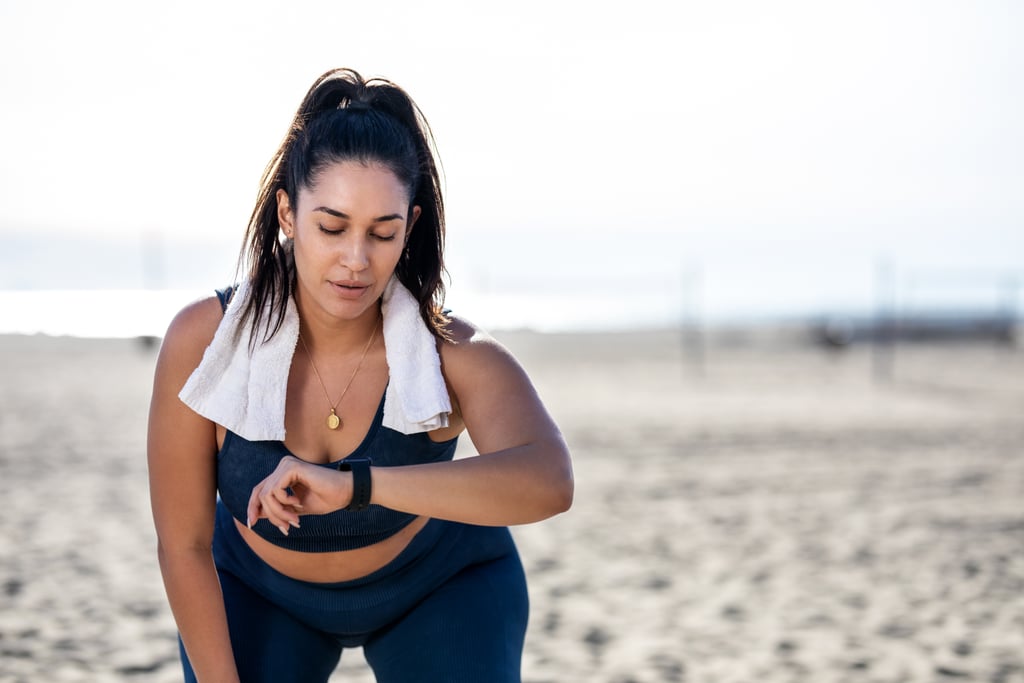
Whether you're performing run-walk intervals or solely jogging, aim to train for a specific amount of time — not a certain distance, the experts advise. "Your body doesn't necessarily know the mileage that you're going to complete, but it knows the time you're spending on your feet," Sekely says. "On one day, a three-mile run might take you an hour to finish, and other days, it will be 30 minutes — that's a pretty big difference in time spent on your feet."
Plus, running for a specific amount of time can feel much more achievable than completing a particular distance. "I think for a lot of beginners, focusing on time takes some worry and pressure out of the run," Norris adds. "If you go out and say, 'I'm going to try to do three miles,' and you start slowing down throughout the run, it can feel really discouraging and daunting." If your pace were to drop during a 30-minute run, though, you'd know your workout wouldn't suddenly take more time to complete.
When you're running outside, use your average pace per mile (which you can determine with the help of a running app) to plan out your route and ensure you make it back to your starting point by the end of your training session.