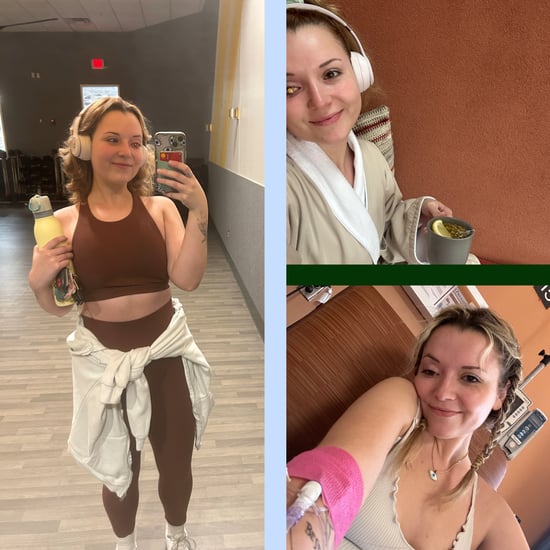
It's hard not to get caught up in labeling foods as good or bad. "It may feel right to put boundaries on your food choices, but ultimately it leads to judgment and too much mental focus on bad choices," explains Siskind. It's also counterproductive. "Sometimes, when foods are off limits, our mind and body crave it more." She tells her clients to focus on eating foods that make them feel good mentally and physically in the long term. "Healthy foods taste good, too. And if you eat a food that isn’t necessarily good for you, accept it and move on."
It's also possible for restrictive dieting to turn into an unhealthy obsession, as Jordan Younger, formerly "The Blonde Vegan," explained on her popular website a few years ago. In a post announcing she was transitioning away from veganism, Younger shared that she had developed orthorexia: "I started living in a bubble of restriction. Entirely vegan, entirely plant-based, entirely gluten-free, oil-free, refined sugar-free, flour-free, dressing-/sauce-free, etc. and lived my life based off of when I could and could not eat and what I could and could not combine."
To improve her physical and mental health, she shared plans to both seek therapy and move away from restrictive labels: "My original passion for health stemmed from learning about real foods and how they affect our bodies vs. chemically produced and factory farmed disgustingness that is not food," she wrote. "But that doesn't mean that living life in moderation is a sin. It's a beautiful thing. To accept moderation, to accept balance, to allow for happiness and growth and change and fluctuation." Younger now writes as "The Balanced Blonde."
Flexibility also makes it easier to limit negative self-talk. With a flexitarian diet, you can focus on what you should eat more of: fruits and vegetables. Since meat is not completely off limits, the temptation to focus on what you're missing is reduced.