If you aren't showing your calves some love come leg day, you may want to think twice — these muscles bring more to the table than you probably realize.
"The calf works seamlessly in conjunction with the entire body to walk, run, and jump," Michelle Pualani Houston, a NASM-certified personal trainer, says — and that includes the ankle joints that mobilize the foot and toes and the knee to flex or bend.
Did you know that the calves are actually made of two muscles: the gastrocnemius and the soleus? Houston explains that each muscle functions differently while working cohesively, which is why stretching and strengthening are equally important during a workout.
"To prevent calf injuries, it's best to take a multidimensional approach to your training or exercise protocol," Houston says.
"Incorporate varied types of movement in different environments to avoid overtraining and to prepare the body for more dynamic ranges of movement that sometimes catch you off guard."
Another important takeaway from Houston is that calves are only as effective and strong as their supporting muscle groups. That's why her calf workout incorporates the quads, hamstrings, and glutes to boost stability, strength, and mobility.
Houston suggests resting for 10-15 seconds between sets, but feel free to take more breaks when needed.
Since stretching is equally as important as strengthening, Houston recommends warming up by walking, lateral stepping, and performing walking high knees with your toes pointed down for five minutes.
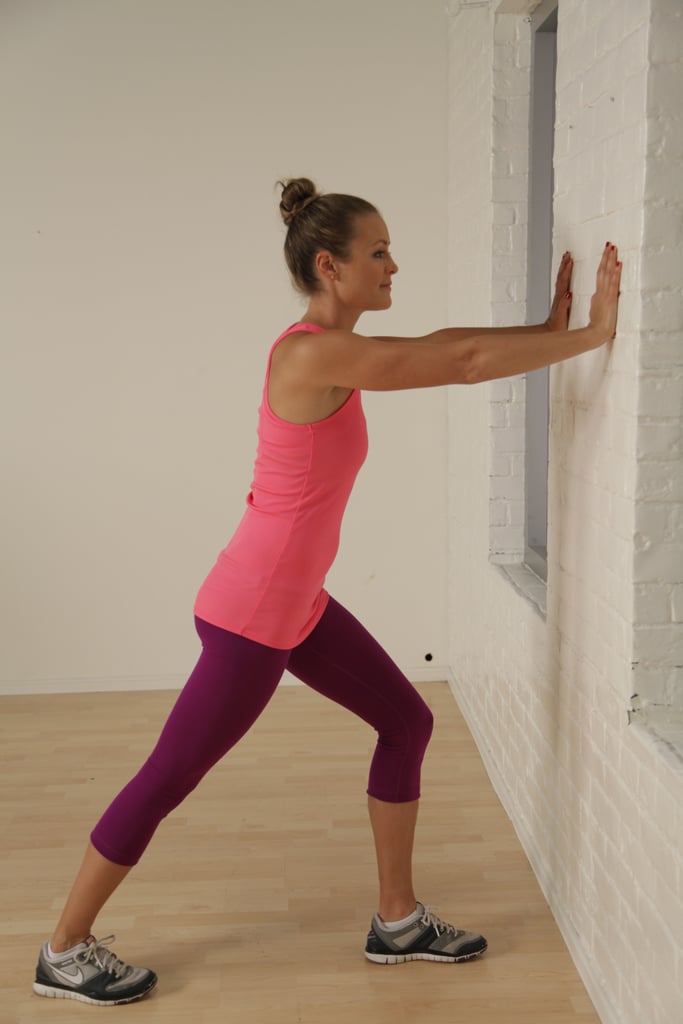
Follow that with a dynamic calf stretch at a wall: "Your hands will meet the wall at about shoulder height with one foot in front of the other, both heels planted, and your toes pointing forward. From there, find motion in the hips (forward and back or side to side) and take some bends in the knees."
Calf raises aim to strengthen the gastrocnemius — the fluttering element works to lengthen the muscle, too. The combination creates stability in the muscle rather than explosivity, Houston says.
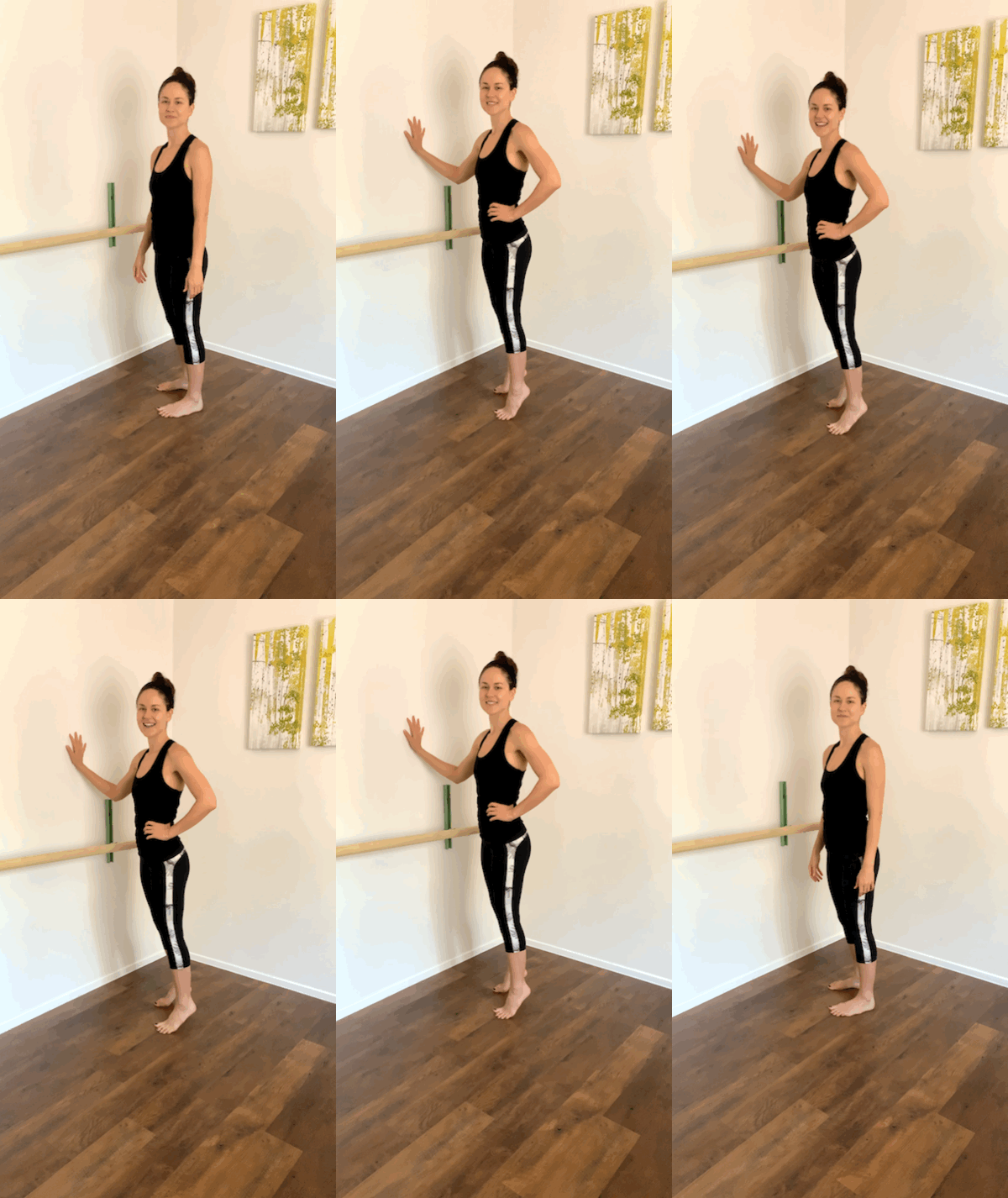
First Position Parallel:
Place the feet hip-distance with your toes pointing forward.
Rest your hands on the waist or on a wall for support.
With your legs straight, lift the heels up as high as possible and gently lower back down.
Hold at the very top of your lift and flutter the heels by pulsing down about an inch quickly for 10 seconds.
Repeat 15-20 times.
First Position Turned Out:
Touch your heels together and turn your toes out in a "V" position.
Rest your hands on the waist or on a wall for support.
With legs straight, lift the heels up as high as possible and gently lower back down.
Hold at the very top of your lift, and flutter the heels by pulsing down about an inch quickly for 10 seconds.
Here, make sure to maintain a bent knee while contracting and relaxing the calf muscles, Houston says. You'll be strengthening your quads, too, by targeting your soleus muscle.
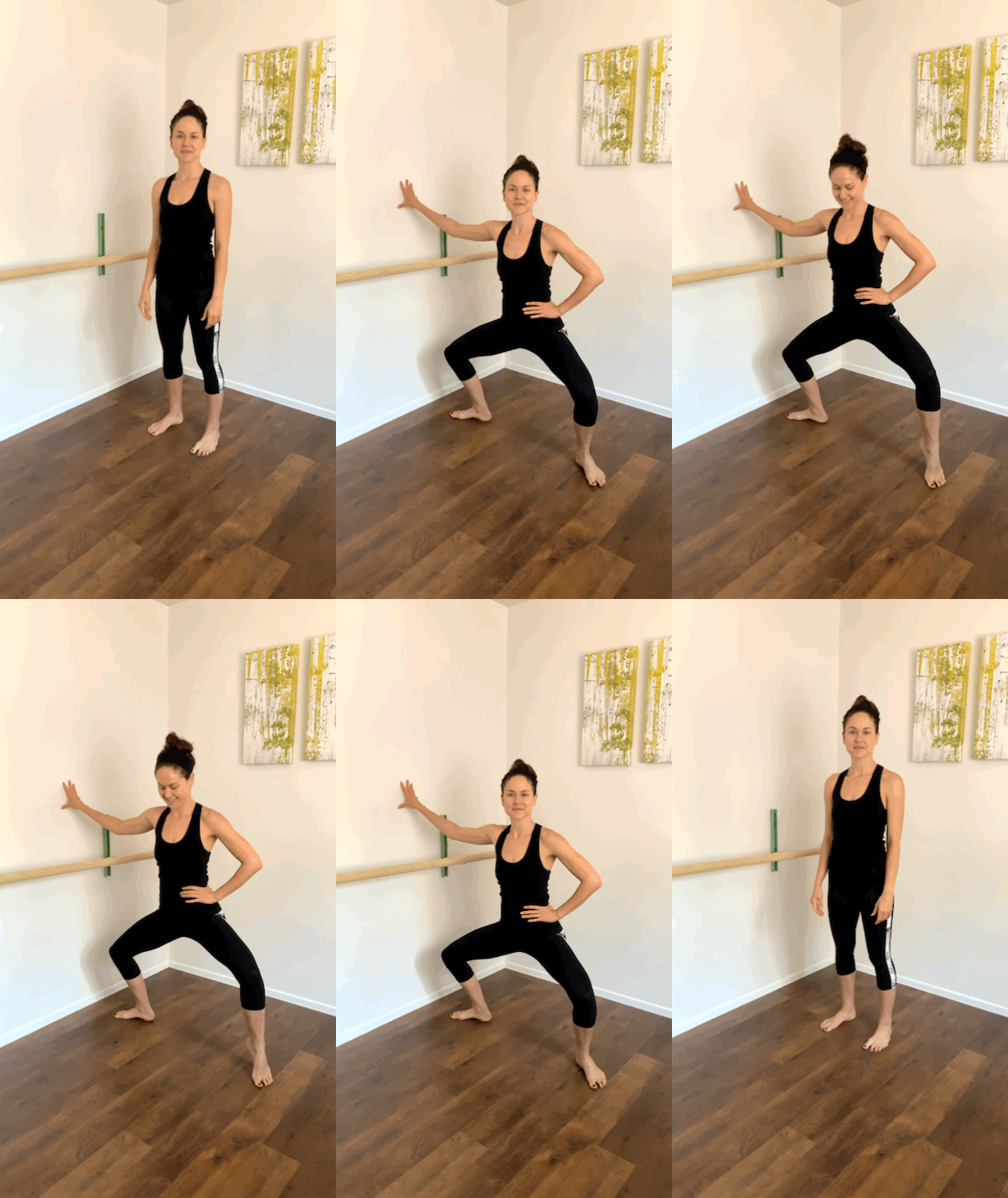
Take the feet out wider than the hips, turn the toes out, and bend into the knees.
Reach your hands out in front of you at shoulder height or rest on a wall for stability.
Hold the bent knee and plie-squat position, and alternate lifting one heel before pressing it back down to the floor without letting it drop.
Alternate lifts 10-20 times on each side while holding the plie position.
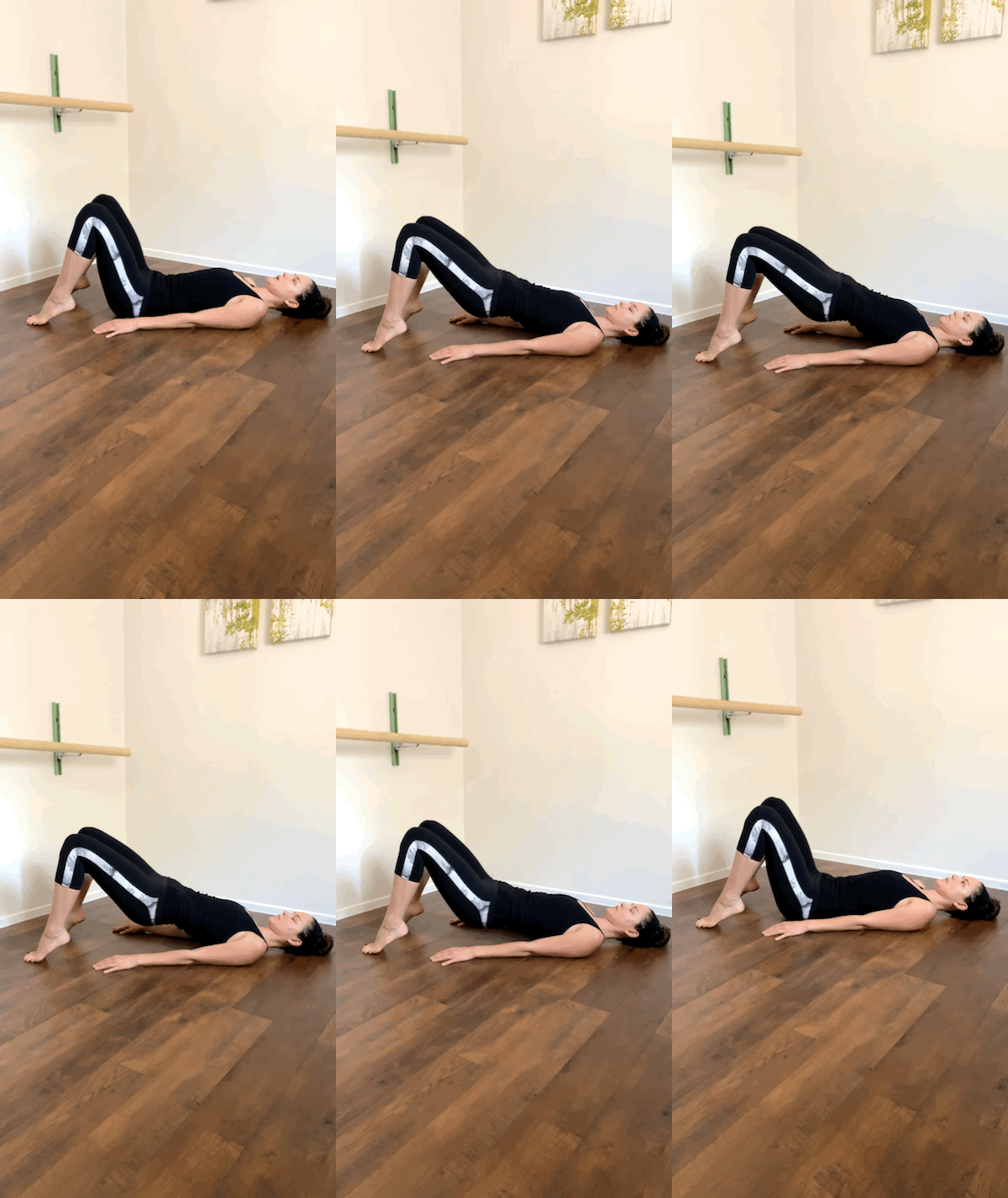
By keeping the knee in a bent position, these bridge exercises emphasize building soleus strength while simultaneously targeting hamstrings and glutes, Houston says.
Recline down onto your back.
Bend the knees straight up so the soles of the feet rest on the floor about hip-distance apart.
Lift onto the balls of the feet, so the heels are off the ground.
Press into the balls of the feet and lift the hips as high as you can.
Lower the hips with control back down.
Continue this full range of motion for 15-20 reps.
Add in a 20-second pulse of the hips at the top for increased intensity.
A major part of cooling down is relengthening the muscle fibers and tissues that were shortened throughout the workout, Houston says.
"While allowing the heart rate to come back to normal, take a short 2-3 minute walk or side-to-side steps," she explains.
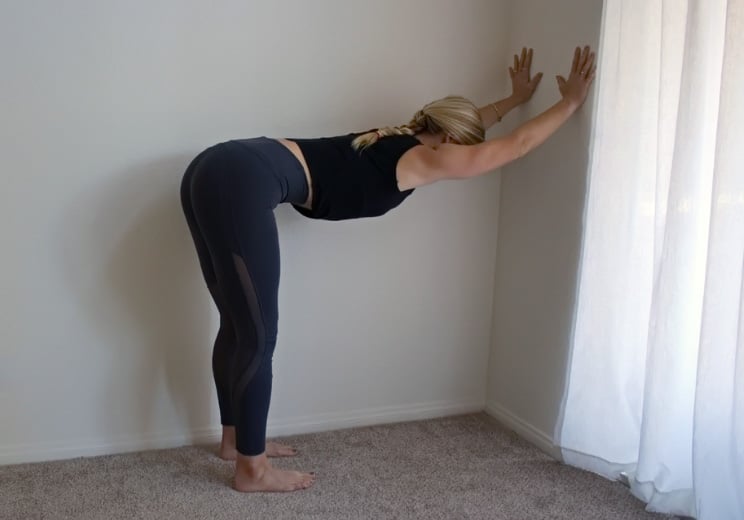
Next, Houston suggests performing static stretches for 30-60 seconds: "You can find an L shape at the wall by planting the feet hip-distance, facing towards the wall and walking the hands down the wall as you tilt the pelvis forward. Stop walking the hands when you feel a stretch through the back of the hamstring and into the top of the calves and hold in a static position."